
Andres Velasquez
Bio
Andrés Velásquez Dután was born in Guayaquil on January 26, 1990. He grew up in a family environment closely linked to artistic practice: his father worked in screen printing, and his mother was dedicated to ceramics. From an early age, he showed a natural inclination toward the arts, beginning his exploration through drawing and painting.
In adulthood, he pursued studies in Design and Audiovisual Production at ESPOL, where he received first place in the IV Concurso de Pintura, a recognition that marked a turning point in his creative trajectory. This achievement sparked a deeper interest in art, leading him to leave his initial career path and enroll in 2012 at the Instituto Tecnológico de Artes del Ecuador (ITAE). In 2019, he completed his degree in Visual Arts at the Universidad de las Artes in Guayaquil.
His principal exhibitions include Los tres huéspedes (Casa Cino Fabiani), El espacio y el vacío (Sala Félix Henríquez), and Homo ludens (Galería Más Arte, Quito). He also participated in the exhibition De cabo a rabo at galería NÓMINIMO. He was part of the collective Los Chivox, with whom he carried out his first interventions in urban space. Additionally, he was selected to collaborate with artist Fran Siegel on the assembly of the work Through, presented at the Consulado de los Estados Unidos in Guayaquil.
Some of his award-winning participations include several honorable mentions in different painting salons; selection for the Premio Brasil and the Premio Batán at galería NÓMINIMO; and first place at the Bienal de Pintura de Guayaquil.
He is currently participating in the art fair JUSTMAD in Madrid, Spain, which will take place in March 2026.
Statement
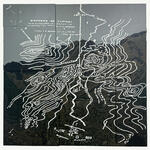
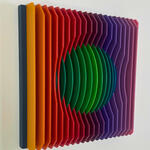
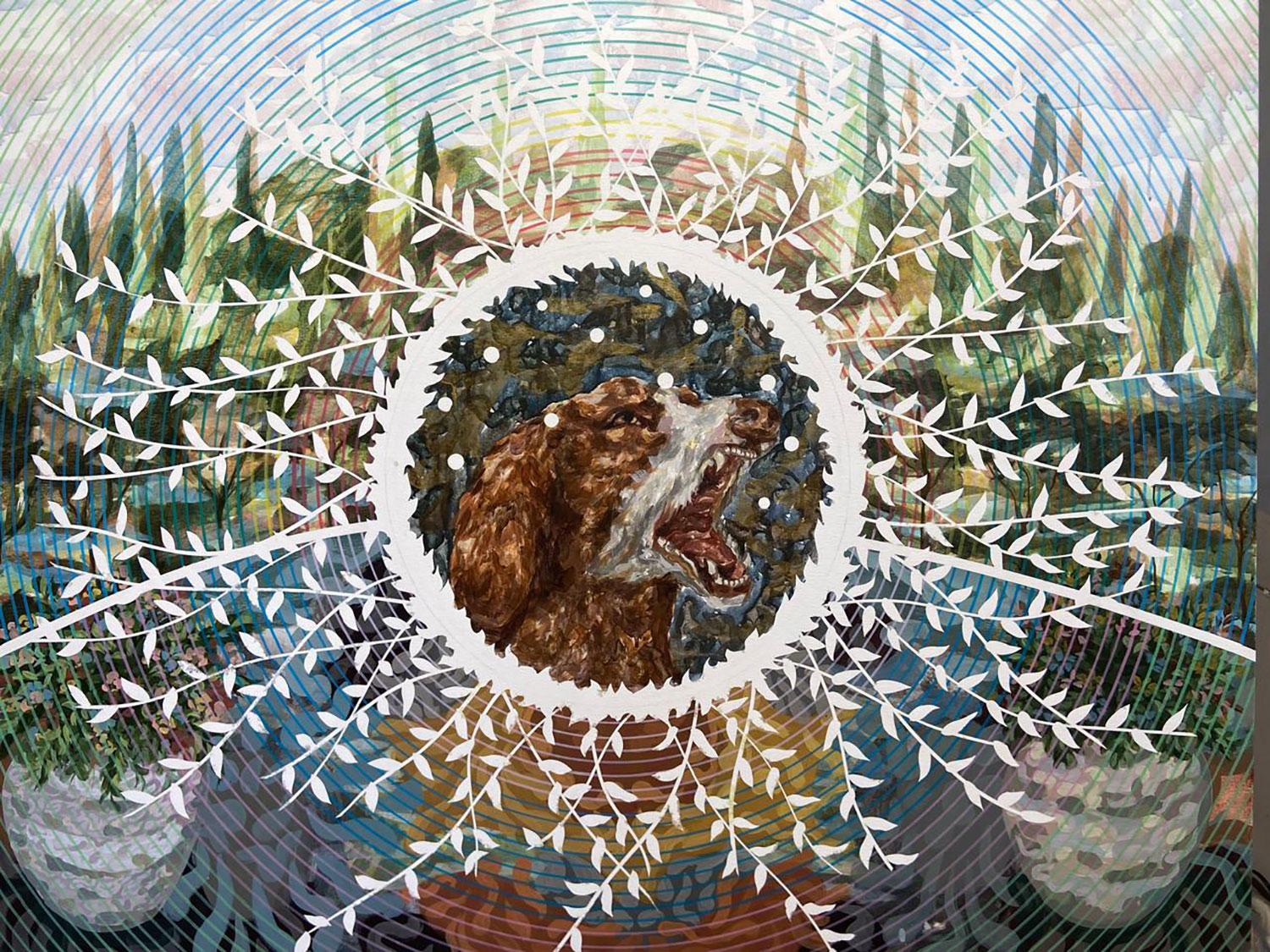
His artistic practice investigates the invisible mechanisms of power that shape social experience. Through a symbolic vocabulary drawn from play, architecture, and the natural world, he reveals systems in which chance operates as a mask for order, control, hierarchy, and exclusion.
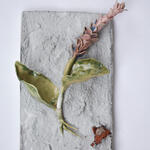
Across game boards, walls, and disappearing micro-ecosystems, his work weaves correspondences between the human and the animal, recognizing in the hunting scene a grammar of domination. Through the superimposition of images onto architectural spaces, bodies enter into tension, exposing the silent persistence of these forces that organize and permeate life.
2.5 x 4m / 98.4 x 157 in