
Mariano León
Bio
Mariano León (Lima, 1976)
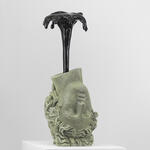
Interdisciplinary artist whose practice integrates visual, sound, and performance arts. Initially trained as a circus artist and DJ, his work explores ancestral technologies, pre-Hispanic systems of knowledge, and the ongoing impact of colonialism.
He is currently producing a vinyl LP based on field recordings from Lake Titicaca, blending sounds from wildlife, Aymara communities, and local astronomical knowledge.
Among his exhibitions are his solo show Plumarios (Herlitzka Gallery, Buenos Aires, 2025), featuring a piece from the series recently acquired by the MALI Museum (Lima), and his participation in the group exhibition EL DORADO: Myth of Gold (Americas Society, New York, 2024). He has also exhibited at the Museum of Civilization (Rome) in a show alongside artist Cecilia Vicuña, and in SinCrónicas (Madrid).
His process includes large-scale public interventions such as Qipu (a 10-meter-high installation presented at the Pedro de Osma Museum, MAC Lima, and ArteBA), as well as site-specific actions, such as his intervention on Fernando de Szyszlo’s Intihuatana sculpture, where he used a kilometer of rope to mark the solstice. In 2018, he completed a residency at ENSAD (Paris) and was selected for the X-Sites program in Sweden.
Statement
Plumarios
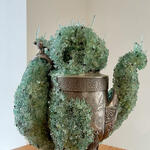
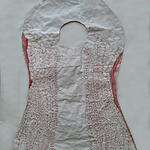
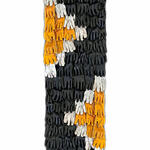
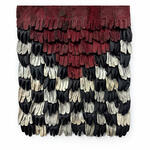
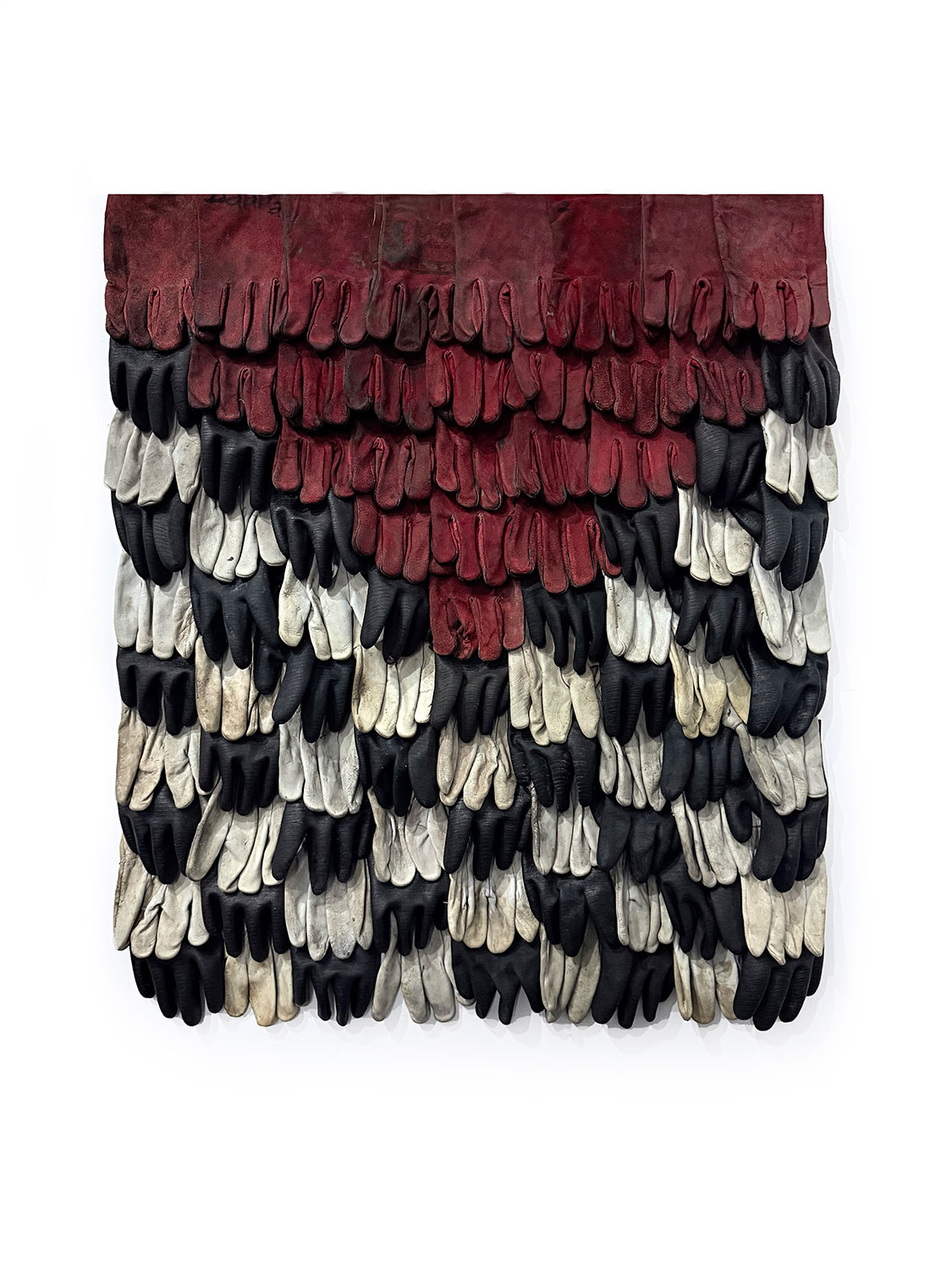
Mariano León’s Plumarios series takes as its starting point pre-Hispanic featherworks: textiles made with feathers of high symbolic, spiritual, and political value, associated with power, ritual, warfare, and hierarchy across various Andean and Amazonian cultures. Traditionally crafted with feathers from tropical birds, these objects embodied exchange, territory, and cosmology.
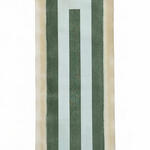
The works in the series are assembled using used industrial gloves—primarily sourced from mining and other forms of intensive manual labor. These discarded materials replace the ritual feather with substances such as leather and rubber, marked by use and wear. The color and deterioration of the material retain the imprint of the body, while at the same time echoing the hues of feathers, thus shifting the ethereal into a tactile memory of human effort.
Positioned between the sacred ancestral realm and global industrial economies, Plumarios proposes an inversion of values: granting symbolic status to what is residual, while revealing the human cost embedded in materials. They function as banners of the present, where labor, history, and territory become intertwined and sacralized once again.


2.5 x 4m / 98.4 x 157 in