
*Victor Vasarely
Bio
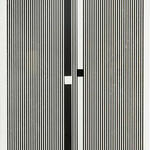
Victor Vasarely (1906–1997) was a Hungarian-French artist regarded as the father of Op Art. Born in Pécs, Hungary, he studied at the Mühely Academy in Budapest, associated with Bauhaus principles. In the 1930s he settled in Paris, where he developed a systematic investigation into visual perception and optical effects. His work is characterized by geometric structures, chromatic contrasts, and modulations that generate sensations of movement and vibration. Series such as Vega consolidated his abstract language based on seriality and repetition. He exhibited internationally, and his work had a decisive influence on kinetic and optical art in the twentieth century.
Statement
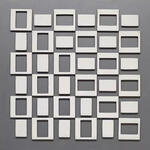
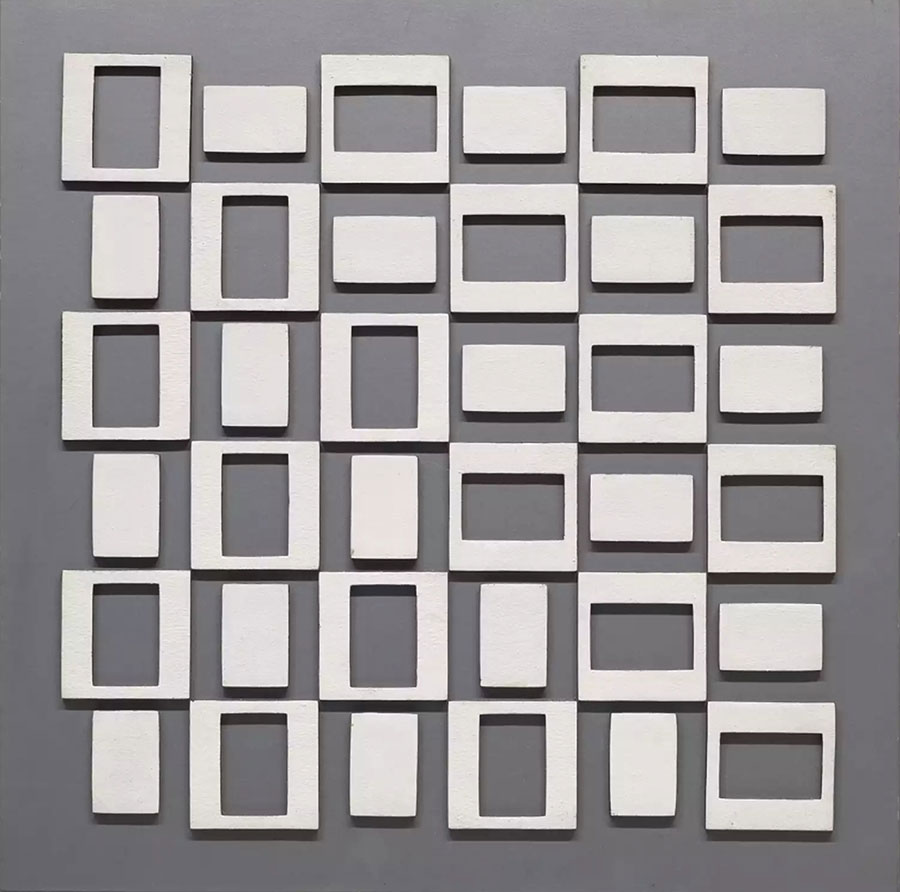
Victor Vasarely’s artistic practice was grounded in the scientific investigation of perception and in the construction of a visual language based on geometry and color. Through repetitive modules and systematic variations, he generated compositions that activate the viewer’s gaze and produce illusions of movement. His work eliminates expressive subjectivity in favor of rational and programmatic structures. Vasarely conceived art as an open and reproducible system, capable of integrating with architecture and public space, transforming visual experience through optical energy and chromatic dynamism.


2.5 x 4m / 98.4 x 157 in