

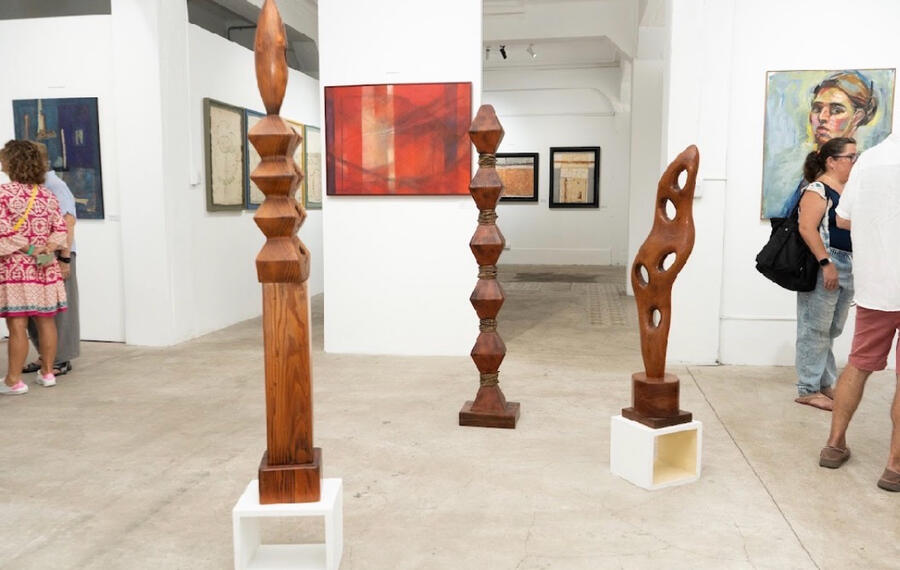
The exhibition at Casa Fugaz, brings together artists who began their careers in the 1980s in Peru, an era marked by violence, uncertainty, and economic crisis. Through painting, installation, and video, these artists offer an introspective and critical look at the historical moment they lived through.
By: Maria Laura Hernandez de Agüero
The crisis of the 1980s, known as the "lost decade," was a dark period in Peruvian history: economic stagnation, hyperinflation, and natural disasters ravaged the country. The war with Shining Path resulted in 70,000 deaths, and Peru faced a terrible human rights crisis. The financial crisis led to hyperinflation, food shortages, mass unemployment, and a sense of hopelessness among the population.
These upheavals resonated within the art world, giving rise to significant exhibitions that solidified a collective feeling and sentiment. "The violence was infinitely more obscene than any metaphor or fiction. Faced with this excess, many artists chose to take refuge in their studios, seeking in that intimacy a form of reflection. It was then that a more introspective work emerged: From Memory and Wound," wrote art critic Luis Lama in Caretas magazine.
Works by artists such as Ramiro Llona, Enrique Polanco, Cuco Morales, Lucy Angulo Lafosse, and Gonzalo Pflucker, among others, showcase the diversity of styles and approaches that characterize this generation.
The exhibition also includes interventions in the main corridor by artists such as Cecilia Paredes and Maricruz Arribas, which expand the reflection on fragility and transformation. The show is a tribute to the generation of the 80s, which demonstrated that art can be a powerful instrument of critique and resistance.
__________
“La generación de los 80” (The Generation of the 80s) Group exhibition.
Casa Fugaz. Jr. Constitución 250 Monumental Callao. Perú.
The exhibition will be open until April 27.