
Carlos Luis "Pajita" García Bes
Bio
Carlos Luis “Pajita” García Bes (Salta, 1914–1978) studied drawing and painting at the Escuela de Bellas Artes Ernesto de la Cárcova, where he trained under Emilio Centurión. Between 1940 and 1942 he received a scholarship from the Province of Salta. In 1942 he toured the country as a puppeteer with the group Los Siete, an experience that also allowed him to exhibit his paintings.
In 1943 he returned to Salta, where in 1948 he opened his own drawing and painting workshop. That same year he worked alongside Lino Enea Spilimbergo at the Department of Arts of the Universidad Nacional de Tucumán. In 1952 he founded the Escuela Provincial de Bellas Artes Tomás Cabrera in Salta and served as its director until 1956.
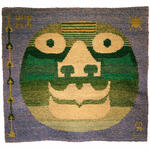
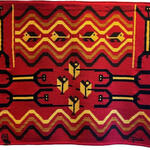
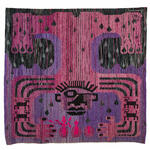
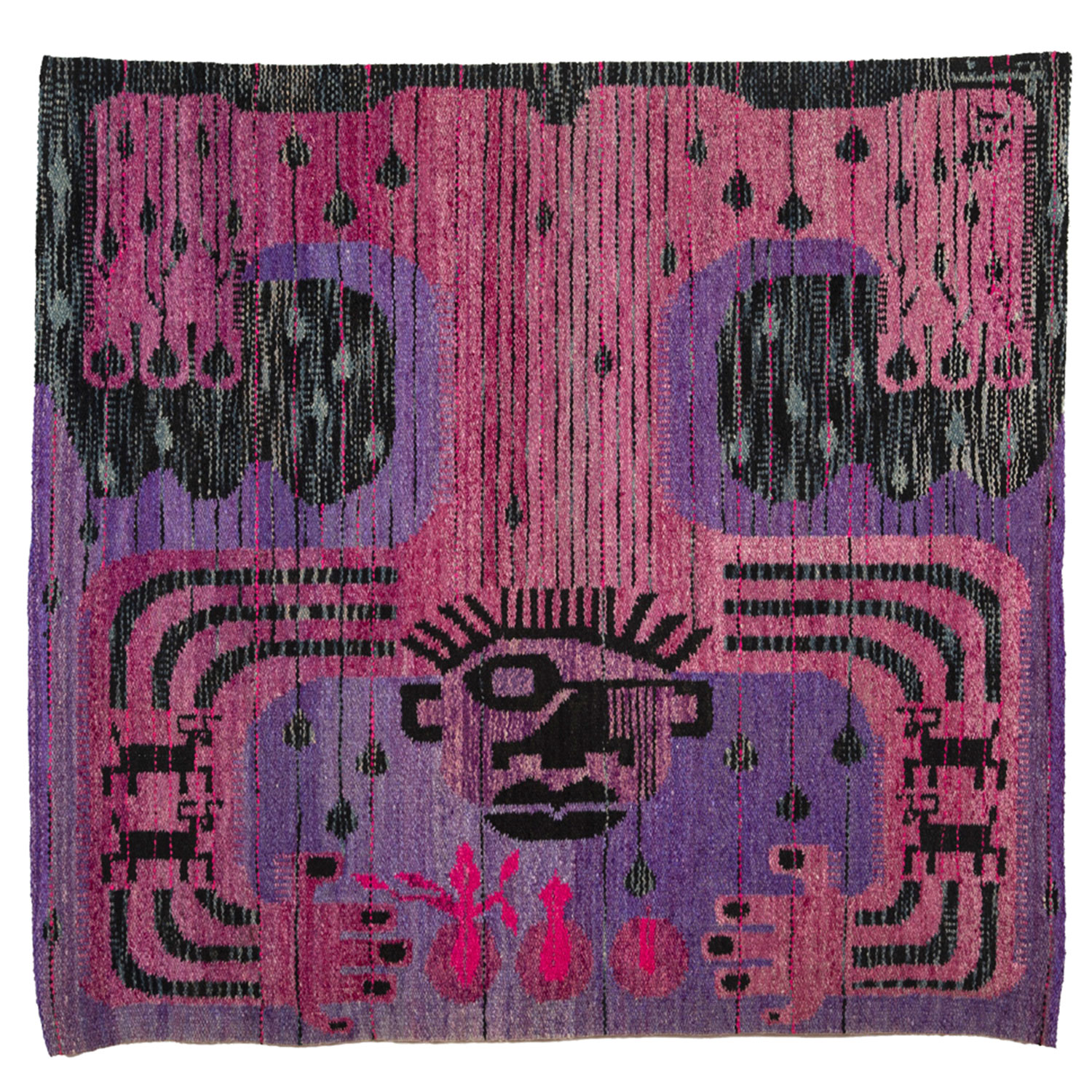
His interest in puppetry led him to travel through Bolivia and Peru with poet Manuel J. Castilla, among others. From 1957 onward he worked in his ceramics and weaving workshop El Caburé, served as advisor to the Mercado Artesanal, and conducted surveys of petrogliphs throughout the province, which later inspired his tapestries.
He served as Director General of Culture of Salta (1968–1969) and as a folklorist researcher for the Fondo Nacional de las Artes (1970–1973). In 1974 he was appointed Delegate Academician for Salta by the Academia Nacional de Bellas Artes. His work is held in museum collections and private collections in Argentina.
Statement
Carlos “Pajita” García Bes (Salta, 1914–78) is considered one of the pioneers in the study and dissemination of tapestry and textile art. His work was exhibited in numerous museums across South America and Europe as part of the Latin Americanist momentum that took place in major international art centers during the 1960s and 1970s.
He is regarded as one of the most striking modern expressions of tapestry in the Americas.
His work is held in institutional collections including the Museo Nacional de Bellas Artes, Museo de Bellas Artes de Salta, Museo de Arte Moderno de Buenos Aires, and MALBA, as well as in significant private collections.
(Text by Mariana Cerviño)

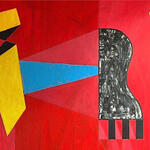
2.5 x 4m / 98.4 x 157 in