
Nicola Costantino
Bio
NICOLA COSTANTINO (Rosario, 1964)
She is one of the most prominent artists of her generation. Trained as a sculptor, her work spans multiple formats, all produced in her emblematic studio in Buenos Aires, where she lives and works.
Her practice denounces the violence inflicted upon the body—a central axis of her research—and her pieces combine a striking beauty with a discomfort that is difficult to resolve.
Cochon sur canapé (1992), her first solo exhibition, is considered a precursor of Latin American contemporary art. In 1998 she represented Argentina at the São Paulo Biennial, and since then has participated in numerous exhibitions in museums around the world, including Liverpool (1999), Tel Aviv (2002), and Zurich (2011). In 2000 she held a solo exhibition at Deitch Projects (New York), and her Human Fur Corset entered the MoMA collection.
Her encounter with Gabriel Valansi in 2006 marked her entry into photography, resulting in more than thirty works in which she embodies different figures from the history of art. Her interest in video performance led her to create the self-referential work Trailer (2010), her first cinematic production, and to engage with the paradigmatic historical figure of Eva Perón in Rapsodia Inconclusa, the installation with which she represented Argentina at the 55th Venice Biennale in 2013.
In 2014, she devoted herself to filming the biographical movie La Artefacta, where the boundaries between documentary and fiction blur.
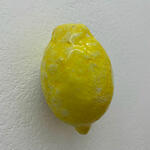
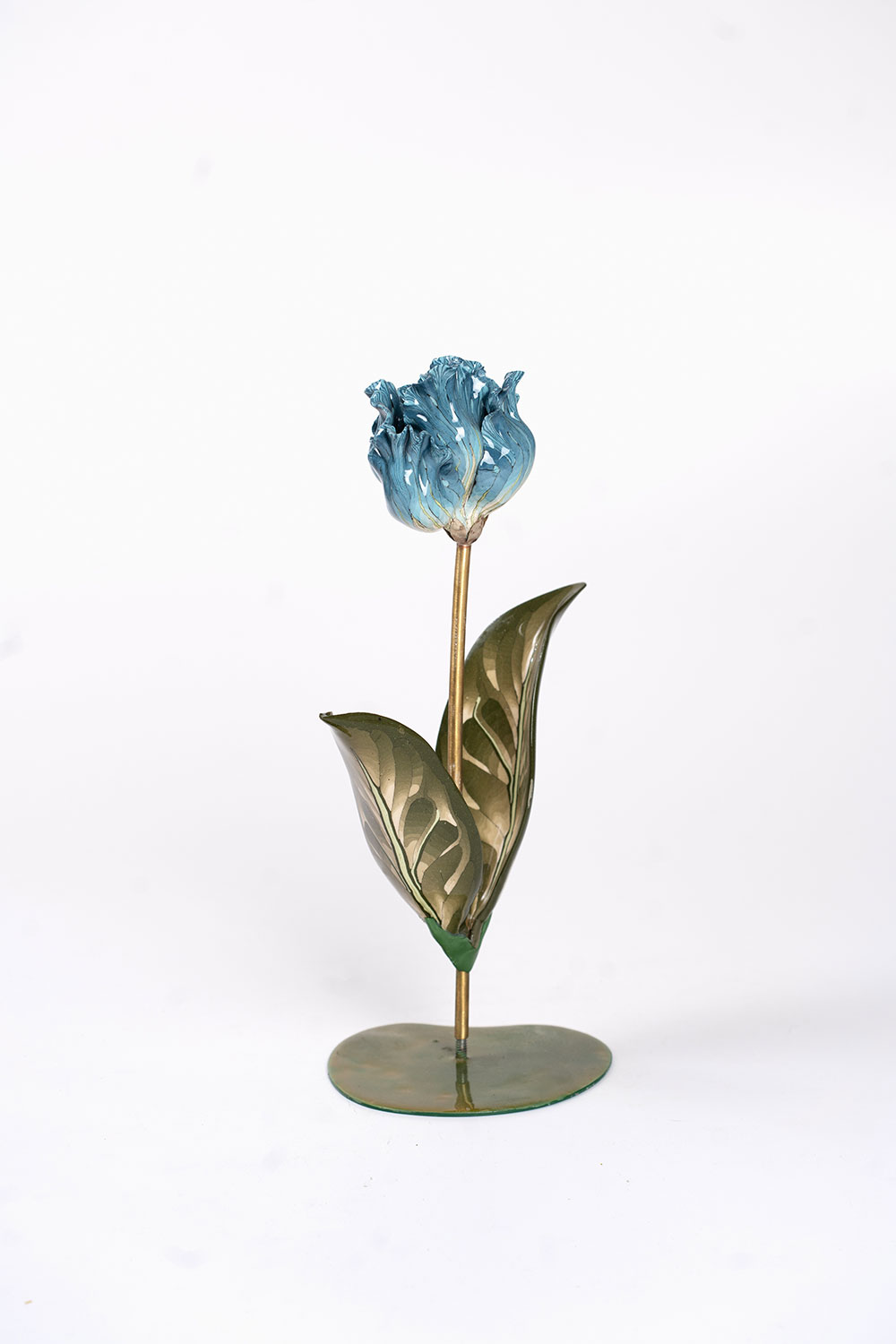
Since the pandemic, Costantino has focused on ceramics, recovering millenary techniques and initiating Pardes, her ceramic art project inspired by the vegetal universe.
Statement
PaRDeS emerges—like all of Nicola’s ideas—from her mastery of numerous techniques and her constant drive to imagine how to combine them. At this stage in her life, she set out to master the techniques of colored ceramics. She soon discovered that her process shares many similarities with Nerikomi, an ancient Japanese technique that Nicola reclaims for contemporaneity and pushes further by refining its design—bringing it ever closer to surrealism—drawing inspiration from the beauty and geometry of the vegetal universe to honor the intelligence and generosity of nature.
Today, Nicola’s commitment is to produce beauty that inhabits our homes and everyday objects.
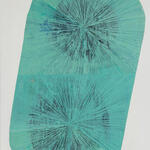
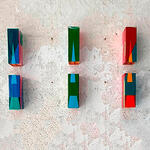
With her unique skill, she has developed a complex technique, arranging pigmented clays in different colors and layering them into vertical blocks in an exercise of imagination and blind composition. When the block is cut transversely, the hidden drawing within the clay is revealed; thus, the result is a graphic work, while the process itself is sculptural. From each block, thirty pieces are obtained—identical and unique at once.
Unique and infinite, as ceramics is a noble material that does not degrade; it is both sustainable and enduring.
Murals “What motivated me to bring ceramics into architecture was realizing that, alongside—or beyond—bronze, stone, and concrete, ceramics is one of the few noble materials capable of withstanding the elements. In the constant battle between urbanization and nature, urbanization seems to be losing. However, we understand that there are ways to build with minimal environmental impact, and together with art and philosophy, these inspire us to rethink new ways of inhabiting the world. The work we propose addresses the delicate balance within this relationship.”