
Guadalupe Miles
Bio
Guadalupe Miles, born in Buenos Aires, currently lives in Bárcena, Jujuy, Argentina.
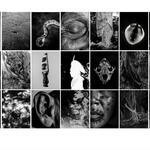
Her work is grounded in the relationship she has established with communities in northern Argentina. Her current practice involves the creation of works through correspondence and actions that generate spaces for gathering and openness, communication and strengthening within contemporary contexts, allowing worlds to reconnect.
The works bring together multiple spiritual, animist, and relational meanings of materials. Some emerge from the realm of dreams, where visions are revealed and manifested.
Guadalupe has received distinctions and grants from the National Endowment for the Arts (Fondo Nacional de las Artes), the arteBA Young Art Award, Fundación Antorchas, and First Prize at the National Photography Salon. She has participated in national and international solo and group exhibitions, with notable presentations including: “Tramas. Obras Tradicionales y Creación Contemporánea Americana,” Barcelona, Spain (2026); Focus Festival Internacional, José Ignacio, Uruguay (2025); the Cairo Biennale, Egypt (2024); Kunsthalle Mannheim, Germany (2023); Centro Cultural Kirchner, Argentina (2022–2023); Documenta Fifteen, Kassel, Germany (2022); Museo en los Cerros, Jujuy (2020–2021); Fundación Proa, Buenos Aires (2020); the Getty Museum, United States (2017); and the International Biennial of Curitiba, Brazil (2019). Her works are part of public and private collections. She is the founder of Artes Visuales del Jaguar. She has published the book “Hace diez mil veces éramos familia.”
Statement
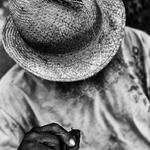
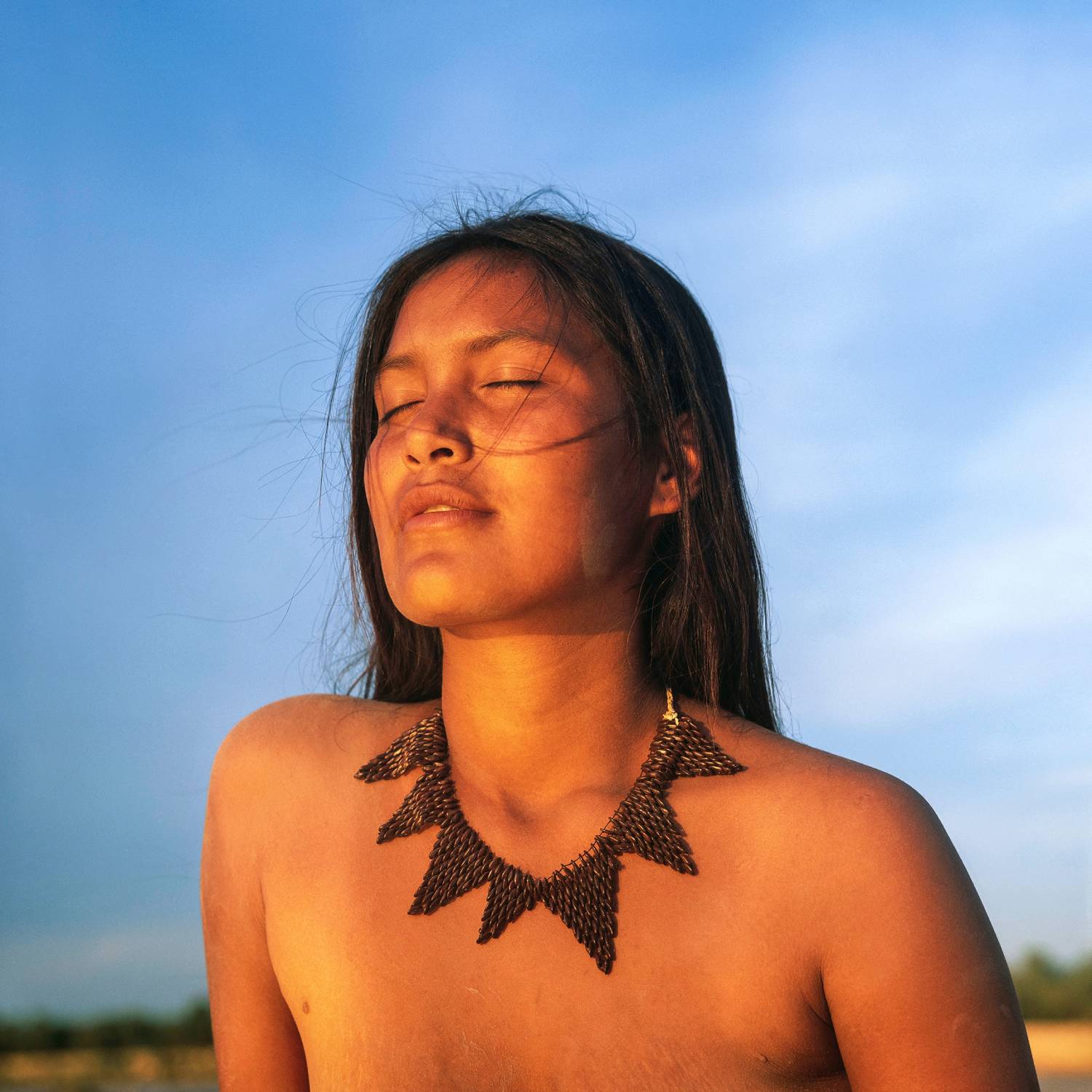
Different cultures articulate these moments into contingent configurations, shaped by specific circumstances, crossed by the becomings propelled by the winds of subjectivity and the body, and summoned by the contingencies of history. Looking at / feeling / thinking about the world in these way(s) fosters connections with the environment, both intelligible and sensory, both symbolic and imaginary. These bonds affect sensations, perceptions, and ideas, activating aesthetic and poetic forces. From these affections, Guadalupe Miles can represent the relationship of bodies with mud and the river, with the forest and the water. With animals. With the light that burns and illuminates the skin.
Intense images shelter both memory and the potential for different futures: they “tremble with reflections of the future,” in Benjamin’s formulation. It is in this openness toward the possible, opposed to what has been established once and for all, that the political meaning of the work must be sought. In Guadalupe’s images, this meaning does not point toward representations of a desired emancipation; rather, it asserts itself through fleeting signs of alternative energies of creation and thought. A nature conceived as a reserve for anthropocentric extractivism is countered by the subtle, barely detectable signs of other ways of managing territory and inhabiting the world. These ways are persecuted by genuine policies of extermination: their biocentric vocation threatens too many interests of global productivism. For this reason, each stitch of beauty can constitute a small act of resistance.
By Ticio Escobar. Asunción, February 2025.
Excerpts from the text “El Cruce,” written by Ticio Escobar for the book “Hace diez mil veces éramos familia.”
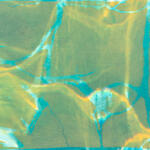
2.5 x 4m / 98.4 x 157 in