Nicola Costantino
Bio
Nicola Costantino (Rosario, 1964) is one of the most prominent artists of her generation. Trained as a sculptor, her work spans multiple formats, all created in her iconic workshop in Buenos Aires, where she lives and works. In her works, she denounces the violence inicted upon the body—a central axis of her inquiry—with pieces that combine an acute beauty with a pervasive unease. Cochon sur canapé (1992), her rst solo exhibition, is considered a precursor to contemporary Latin American art. In 1998, she represented Argentina at the São Paulo Biennial, and since then she has participated in numerous exhibitions in museums around the world, including notable shows in Liverpool (1999), Tel Aviv (2002), and Zurich (2011). In 2000, she held a solo exhibition at Deitch Projects in New York, and her Human Fur Corset was acquired for the MOMA collection. Her encounter with Gabriel Valansi in 2006 marked her entry into the world of photography, resulting in over thirty works in which she embodies different artistic personas. Her interest in video performance led her to create the self-referential work Trailer (2010), her rst venture into cinematic production, and to approach a paradigmatic historical female gure, Eva Perón, in Rapsodia Inconclusa, the installation with which she represented Argentina at the 55th Venice Biennale in 2013. In 2014, she devoted herself to lming the biographical movie La Artefacta, blurring the boundaries between documentary and ction. Since the pandemic, Nicola has been focusing on ceramics, reviving ancient techniques, and she has started Pardes, her ceramic art project inspired by the botanical universe.
Statement
Nicola Costantino (Rosario, 1964) is one of the most prominent artists of her generation. Trained as a sculptor, her work spans multiple formats, all created in her iconic workshop in Buenos Aires, where she lives and works. In her works, she denounces the violence inicted upon the body—a central axis of her inquiry—with pieces that combine an acute beauty with a pervasive unease. Cochon sur canapé (1992), her rst solo exhibition, is considered a precursor to contemporary Latin American art. In 1998, she represented Argentina at the São Paulo Biennial, and since then she has participated in numerous exhibitions in museums around the world, including notable shows in Liverpool (1999), Tel Aviv (2002), and Zurich (2011). In 2000, she held a solo exhibition at Deitch Projects in New York, and her Human Fur Corset was acquired for the MOMA collection. Her encounter with Gabriel Valansi in 2006 marked her entry into the world of photography, resulting in over thirty works in which she embodies different artistic personas. Her interest in video performance led her to create the self-referential work Trailer (2010), her rst venture into cinematic production, and to approach a paradigmatic historical female gure, Eva Perón, in Rapsodia Inconclusa, the installation with which she represented Argentina at the 55th Venice Biennale in 2013. In 2014, she devoted herself to lming the biographical movie La Artefacta, blurring the boundaries between documentary and ction. Since the pandemic, Nicola has been focusing on ceramics, reviving ancient techniques, and she has started Pardes, her ceramic art project inspired by the botanical universe.


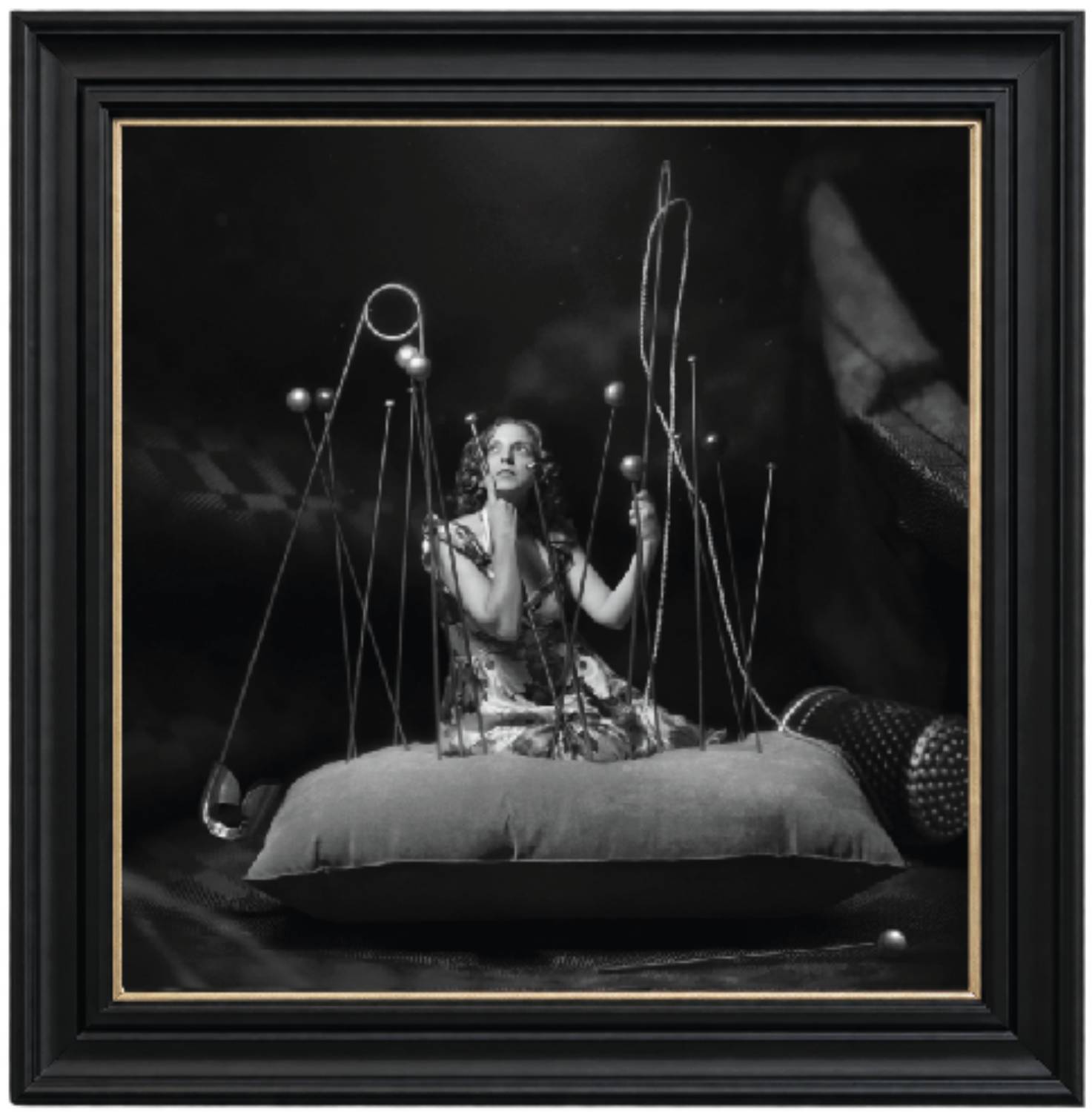
2.5 x 4m / 98.4 x 157 in