
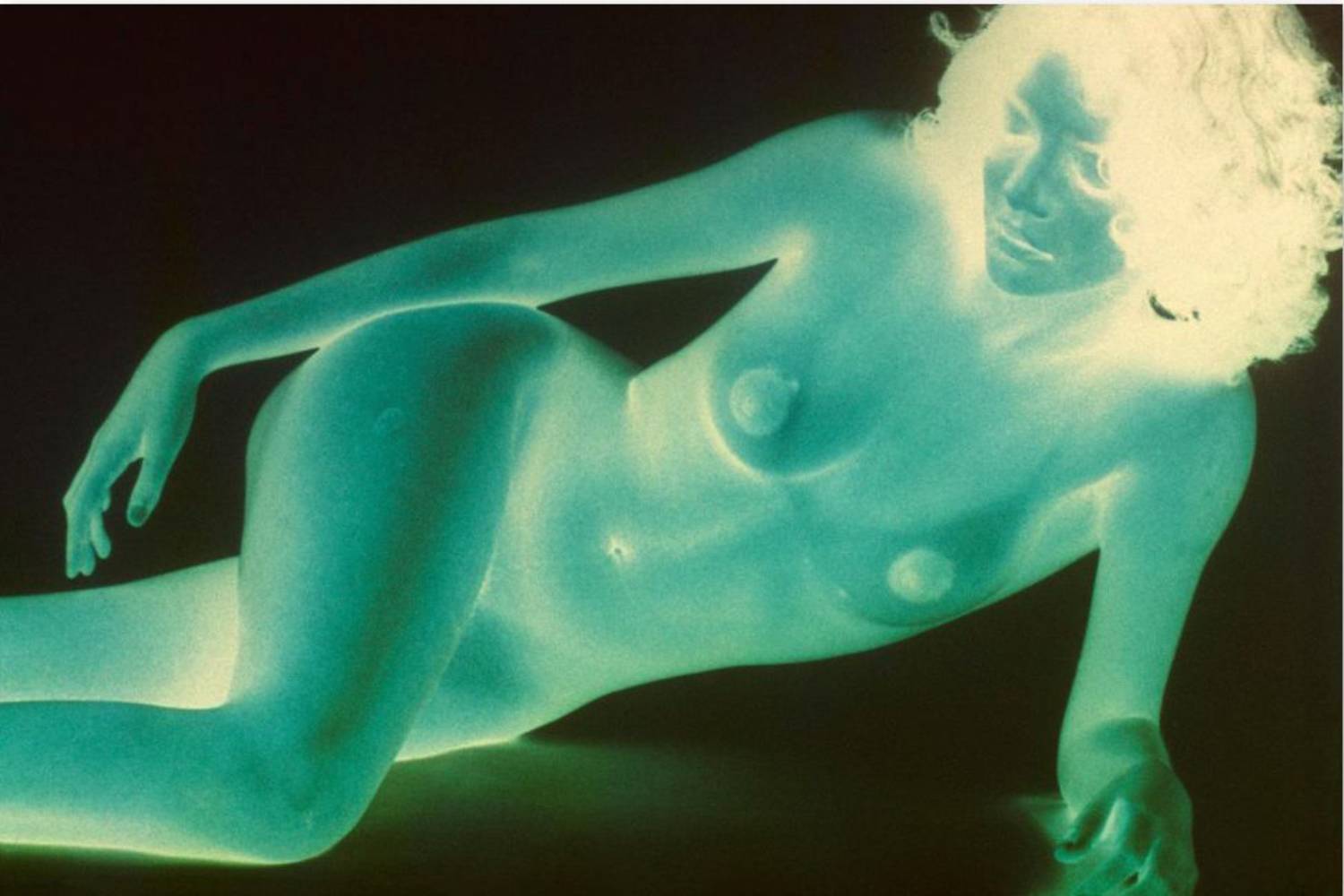
Claudia Andujar
Bio
Claudia Andujar (Neuchâtel, 1931) is a Swiss-born artist and activist who became a naturalized Brazilian citizen and who, together with other activists, founded the Commission for the Creation of the Yanomami Park (CCPY) in 1978 – known as the Pro-Yanomami Commission. The Commission, coordinated by Andujar, organized the campaign for the demarcation of Yanomami territory in order to ensure the preservation and survival of this Indigenous people of the Amazon. The Yanomami Indigenous Territory was recognized by the Brazilian government in 1992. Andujar has made the struggle for the preservation of the Yanomami people, culture, and land her life’s work.
Claudia Andujar, Galeria Vermelho, and Hutukara Associação Yanomami (HAY) – an NGO led by Yanomami shaman and political leader Davi Kopenawa Yanomami – have worked together since 2004. Andujar and Vermelho donate 33% of the profits from sales of the artist’s work to HAY.
Andujar escaped the Holocaust by fleeing to Switzerland with her mother in 1944. At the end of 1946, she crossed the Atlantic to the United States to join her uncle, the only survivor of her father’s Jewish family. In New York, she studied at Hunter College, worked as a guide and translator at the UN, and began producing paintings.
In 1955, she moved to São Paulo to reunite with her mother, who had migrated to Brazil shortly after the end of the war. Unable to speak Portuguese, Claudia turned photography into a working tool, a means of connecting with the country, and a way of communicating with its inhabitants. Over the following decades, she collaborated with national and international magazines such as Life, Aperture, Look, Realidade, Quatro Rodas, and Setenta.
In 1971, she had her first contact with the Yanomami and, in 1978, founded the CCPY together with Italian missionary Carlo Zacquini and anthropologists Alcida Ramos, Beto Ricardo, and Bruce Albert; a year later, the committee presented the mapping of the Yanomami Indigenous Territory to the Brazilian government.
In 1973, Andujar began teaching photography at MASP, where she was head of department. As an artist, she then began participating in a series of exhibitions and publishing books with her photographs.
Claudia’s story is available in Portuguese, English, Italian, and French on the Fondation Cartier pour l’Art Contemporain website. The foundation has supported the artist’s work for twenty years.
In 2000, Claudia Andujar received the Lannan Foundation’s Annual Cultural Freedom Award [Photography] (New Mexico, USA), as a defender of Human Rights. In 2003, she received the Severo Gomes Award from the Teotônio Vilela Commission for Human Rights (São Paulo, Brazil), and in 2005, the APCA [São Paulo Association of Art Critics] award for Best Photography Exhibition for Vulnerabilidade do Ser, held at the Pinacoteca do Estado (São Paulo, Brazil). In 2008, she was honored by Brazil’s Ministry of Culture for her artistic and cultural achievements. In 2018, she received the Goethe-Medaille in Weimar (Germany), for her lifelong contribution to international relations. Claudia Andujar shared all these honors with her friend and fellow activist Davi Kopenawa Yanomami.
Andujar was awarded two Guggenheim Foundation fellowships (1971 and 1977) and has participated in numerous exhibitions in Brazil and abroad, notably the 24th and 27th São Paulo Biennials.
Her panoramic exhibition A Luta Yanomami opened at MUAC, in Mexico City, in May 2023, with support from the Fondation Cartier, following its presentation at several institutions, including the Fondation Cartier pour l’Art Contemporain (France), Triennale di Milano (Italy), Fundación MAPFRE (Spain), Fotomuseum Winterthur (Switzerland), Barbican Centre London (England), and The Shed, New York (USA).
Her work is held in the collections of important institutions around the world, including: Museo de Arte Latinoamericano de Buenos Aires [MALBA] (Argentina); Pinacoteca do Estado de São Paulo (São Paulo, Brazil); Museu Afro Brasil Emanoel Araujo (São Paulo, Brazil); Museu de Arte de São Paulo Assis Chateaubriand [MASP] (Brazil); Museu de Belas Artes (Rio de Janeiro, Brazil); Museo de Arte Moderno de Medellín [MAMM] (Colombia); Museum of Modern Art [MoMA] (New York, USA); Institute of Contemporary Art [ICA] (Miami, USA); TATE Modern (London, England); Maison Européenne de la Photographie (Paris, France); Fondation Cartier pour l’Art Contemporain (Paris, France); Museum für Moderne Kunst [MMK] (Frankfurt, Germany); Stedelijk Museum (Amsterdam, the Netherlands); and Museo Nacional Centro de Arte Reina Sofía (Madrid, Spain). Instituto Inhotim, in Brumadinho (Brazil), maintains a permanent gallery with more than 300 of her photographs, inaugurated in 2017.
Statement
Claudia Andujar’s artistic practice is deeply intertwined with photography, experimentation, and political engagement. Since settling in Brazil in the 1950s, she has used photography not only as a means of documenting reality, but also as a tool for communication, encounter, and advocacy.
Her work is particularly defined by her relationship with the Yanomami people, whom she first encountered in 1971. Over several decades, Andujar developed an extensive body of work that combines documentary photography with a highly experimental visual language. Techniques such as long exposures, image superimposition, rephotography, filters, and interventions with light allowed her to move beyond conventional ethnographic representation and create images that evoke the spiritual, social, and cultural dimensions of Yanomami life.
Her artistic practice cannot be separated from her activism. In 1978, Andujar co-founded the Comissão Pró-Yanomami (CCPY) and played a central role in the campaign for the demarcation of Yanomami territory, officially recognized by the Brazilian government in 1992. Photography thus became both an artistic language and an instrument of political action.
Across her career, Andujar has explored themes including identity, displacement, vulnerability, memory, territory, and the relationship between individuals and their social environments. Her work brings together personal experience, formal experimentation, and sustained engagement with human rights, challenging the boundaries between art, documentary practice, and activism.
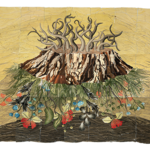
2.5 x 4m / 98.4 x 157 in