

Argentine artist Luciano Garbati develops a sculptural practice in dialogue with the classical tradition, reinterpreting elements of Mannerism and the Baroque from a contemporary perspective. Through the human figure, he explores a symbolic universe shaped by myths and archetypes, establishing connections between history and the present. Trained in Buenos Aires, Rome, and Carrara, his work reflects on the enduring relevance of figurative sculpture and the power of the image.
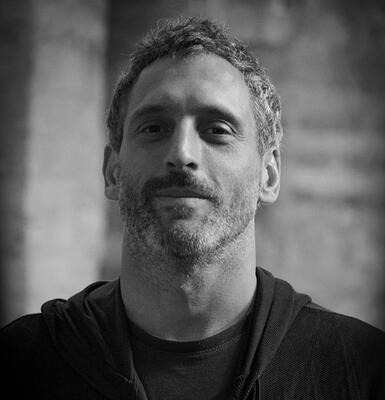
Luciano Garbati
My work is built in direct dialogue with the classical tradition, reconfiguring the sculptural imagination through a contemporary perspective. As a sculptor, my practice draws on formal elements of Mannerism and the Baroque to explore a symbolic universe shaped by myth and archetypes, seeking to make each piece a bridge between history and the present.
After studying in Buenos Aires and specializing in Rome and Carrara, I have developed a poetic language that uses the human figure as a site of tension. I am particularly interested in the moment when the traditions of figurative sculpture cease to be a static legacy and become the starting point for a personal exploration. In my work, the emphasis lies in the construction of the image. I understand that sculptural form finds its completion in its materiality, but it is the power of the image that guides the execution of each piece.
In my sculptures, I seek to crystallize the traces of that vocatio that runs through the aesthetic experience. I understand art as a calling that addresses the world, the artist, and the viewer alike. My intention is for each piece to become the place where that receptiveness takes tangible form.
My work Medusa with the Head of Perseus (2008) marked a turning point, allowing me to bring these questions into the public sphere, with exhibitions at Collect Pond Park in New York and the Musée des Beaux-Arts in Caen, France, and an upcoming presentation at the Valkhof Museum in Nijmegen, the Netherlands. Seeing my work engage in dialogue with the legacy of masters such as Cellini and Rodin reinforced my conviction that myths are not museum relics, but living narratives waiting to be reclaimed.