
Miguel Angel Vidal
Bio
Miguel Ángel Vidal graduated in 1952 from the Prilidiano Pueyrredón National School of Fine Arts (now IUNA Visual Arts) with a degree in Visual Arts. His teachers included Lino Enea Spilimbergo and Eugenio Daneri. He served as director of the school from 1989 to 1991, and was also a Professor of Painting and Head of Theses at the Ernesto de la Cárcova Higher School of Fine Arts.
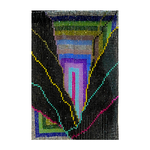
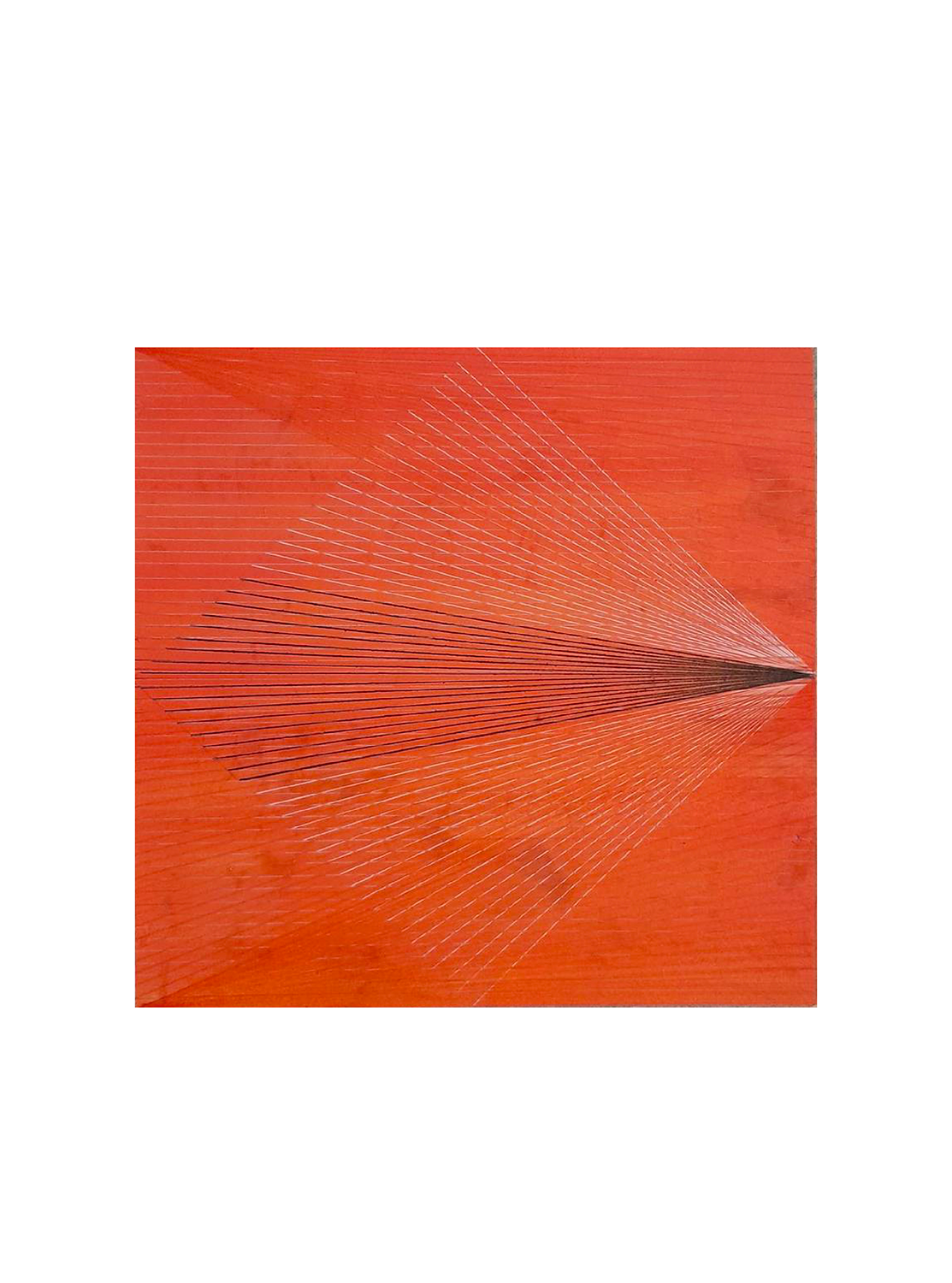
He created all his work in his Buenos Aires studio, exhibiting it throughout Argentina and internationally. He explored naturalism and studied line as a form of expression. Over time, his need for greater expression led him to engage with post-cubism, culminating in his research on abstraction and geometry. He was a member of the Young Group (1949-1951) and in 1959, together with Eduardo Mac Entyre, founded the Generative Art Movement of Buenos Aires. In 1960, with the support of collector Ignacio Pirovano and the director of the Museum of Modern Art of Buenos Aires, Rafael Squirru, they held the first exhibition of Generative Art at the Peuser Gallery in Buenos Aires. He also produced one of the first editions of digital art using images created by IBM computers at the ORT Schools Computing Center. Some of the works from these editions were exhibited at the Art and Cybernetics Exhibition held at the Bonino Gallery, organized by the Center for Art and Communication (CAyC) in August 1969. These works are currently held in the Victoria & Albert Museum in London, Tate Modern in London, and the Albright-Knox Museum in Buffalo, New York.
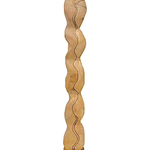
During his topological period, Vidal became interested in new scientific concepts about spatial phenomena, developing them to offer a new visual approach. He worked with acrylic and metal boxes to access real space in three dimensions; in these topological spaces, light is reflected on concave and convex surfaces.
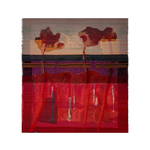
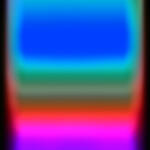
From the late seventies and early eighties, light acquired autonomy and became the predominant element in Vidal's painting, covering more space and displaying greater energy. Bands of color appear veiled, boundaries are imprecise, and curves with melodic rhythms are almost tactilely perceived.
Statement
Argentine visual artist, co-founder of the “GENERATIVE ART” movement, with his own unique style, drawing on constructivism, op art (optical art), and geometric art.
In 1952, he graduated from the Pirilidiano Pueyrredón National School of Fine Arts (now IUNA Visual Arts) with a degree in Visual Arts.


2.5 x 4m / 98.4 x 157 in