Julieta Anaut
Bio
Born in 1983 in Río Negro, Argentina. Visual artist, graduated from IUPA (Río Negro), and holds a Master’s Degree in Combined Artistic Languages from UNA (Buenos Aires). Exhibited at the Argentine Consulate in New York; Art Museum of the Americas (Washington); IILA (Rome); Bronx Documentary Center (New York); Elysium Gallery (Swansea, UK); BIENALSUR - Museo Nacional de Artes Visuales (Montevideo); Fundación Atchugarry (Maldonado); C. C. Recoleta (Buenos Aires); CCEBA (Buenos Aires); C. C. Rojas UBA (Buenos Aires); MNBA Neuquén; MAC Salta; Museo Pettoruti (La Plata); MMAMM (Mendoza); MUMBAT (Tandil). In 2020, ArtexArte published the book “Lo propio, la adoración, lo errante”, featuring her work produced since 2008. In 2024, she participated in Ffoto Cymru, organized by Ffotogallery (Cardiff, UK), with a grant from the British Council. She has received the Art and Technology Award at “Fotografía Céfiro 2019”; Mention, “Premio Ayerza ANBA 2018”; First Prize at “XVIII Salón Artes Visuales Río Negro 2013”; FNA Grant 2012; and Young Artist Award at “Bienal ArtexArte 2008”. Finalist for “109º Salón Nacional de Artes Visuales 2021”, “Premio Itaú 2014”, “Premio Petrobras BAPhoto 2009”, and “XII Premio Klemm 2008”. Participated internationally in film and video art festivals.
Statement
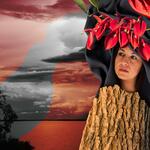
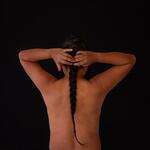
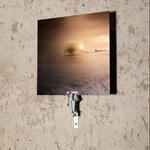
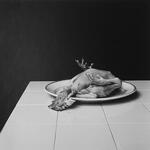
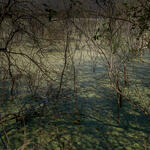
Through digitally manipulated photography, photomontage, and video, she explores themes such as the body, women, ritual scenes, and the relationship with natural and built environments. These projects incorporate staging, performance, and the intersection of different languages, approached through digital techniques. They reinterpret ritual scenes in an intimate and personal way, drawing on mythical figures, pagan cults, and art-historical narratives related to representations of women. They also emerge from stories rooted in the Argentine territory, such as legends about the origins of native flowers. The worship of nature, the experience of the landscape, everyday objects, and the use of her own body are key to the construction of this syncretic and staged imaginary, which evokes a sense of sacredness.


2.5 x 4m / 98.4 x 157 in