
Carlos Garaicoa
Bio
Carlos Garaicoa (Havana, 1967) studied at the Instituto Superior de Arte and grew up in Old Havana, the city that became the center of his work. His practice, which includes drawing, photography, installation, sculpture, and video, explores the relationships between the built environment, collective memory, and power. He has taken part in Documenta 11 (2002), the Venice Biennale (2005, 2009, and 2013), the São Paulo Biennial, and the Gwangju Biennale (2018). His solo exhibitions include those at MOCA Los Angeles, Parasol Unit in London, the Peabody Essex Museum, the Museo Nacional de Bellas Artes de La Habana, and CAAM in Gran Canaria (2024). His work is in the collections of MoMA, Tate Modern, the Guggenheim, the Centre Pompidou, the Museo Reina Sofía, MFAH, and LACMA. He lives and works between Havana and Madrid.
Statement
Garaicoa makes the city his central subject: its ruins, its memory, and the structures that shape our perception of space and belonging. From his early interventions in Old Havana, where he imitated official plaques and photographed decaying buildings, to his models, thread drawings, photographic series such as Puzzles, and large-scale installations, he turns architecture from object into subject. His work moves between power and resistance, memory and forgetting, construction and destruction, and proposes the garden and nature as paths to the rebirth of today's cities.
Additional information
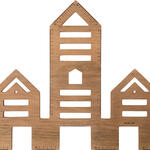
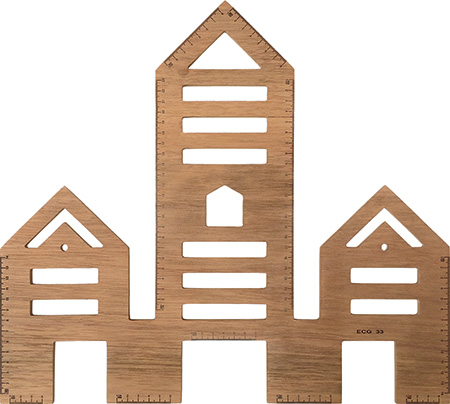
Desde la década de 1990, Garaicoa ha trabajado con la memoria fragmentada de La Habana: las ruinas, los monumentos y el fracaso de los programas arquitectónicos y sociales cubanos son temas centrales de su obra. Esta serie de siluetas recortadas de la ciudad, en madera, acero o acrílico, condensa la idea de la ciudad como una silueta fragmentada, a caballo entre la utopía urbana y su ruina.
Since the 1990s, Garaicoa has worked with the fragmented memory of Havana: ruins, monuments, and the failure of Cuban architectural and social programs are central themes of his work. This series of cut-out skylines, in wood, steel, or acrylic, condenses the idea of the city as a fragmented silhouette, between urban utopia and its ruin.