
Horacio García Rossi
Bio
HORACIO GARCÍA ROSSI (1929–2012)
Born in Buenos Aires, Argentina, in 1929, he studied at the city’s School of Fine Arts, where he later taught for several years. In 1959, he settled in Paris, and the following year, in 1960, he co-founded the Centre de Recherches d'Arts Visuels—which later became GRAV (Groupe de Recherche d'Art Visuel / Visual Art Research Group). He remained a member until 1968, alongside J. Le Parc, F. Morellet, F. Sobrino, J. Stein, and J.P. Vasarely. From the late 1970s onward, the artist focused specifically on the relationship between light and color, and its representation in pictorial terms.
WHAT IS GRAV?
GRAV is the French acronym for Groupe de Recherche d'Art Visuel (Visual Art Research Group).
This aesthetic and artistic group was founded in Paris in 1960 by Julio Le Parc, García Rossi, Hugo Demarco, F. Morellet, Denise René, Francisco Sobrino Ochoa, J. Stein, and Yvaral; Norberto Gómez also participated in the group. As the name suggests, their primary interest lay in artistic research into light, color, and visual effects in general. This led to experimentation with optical (Op Art), kinetic (kinetic art), and even haptic (primarily tactile) elements within their objects. Through these components, they created works in which the participation of the "spectator" and spatial transformations played a decisive role. The group disbanded in 1968. Some of their most notable projects include: Laberinto (1963), Laberinto II (1965), and Un día en la calle (1966). With the GRAV, one could say that a form of art—primarily interactive and centered on the relationship between the "spectator" and the artwork—was decisively inaugurated.
The Visual Art Research Group (GRAV) issued its own manifesto, which emphasizes that the artwork itself is less important than its interpretation; the focus lies with the spectator, who participates actively in works akin to installations. Some of these pieces incorporate kinetic effects driven by silent motors, while others invite the audience to engage with plays of transparency, light, reflection, and movement. In short, the aim is an art stripped of all mystification—reduced, instead, to a simple human activity.
Statement
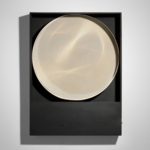
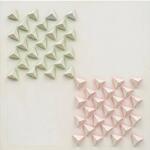
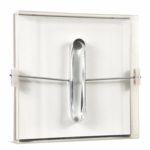
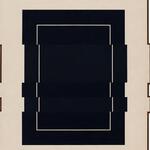
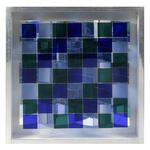
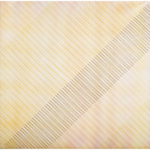
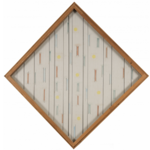
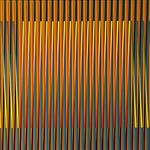
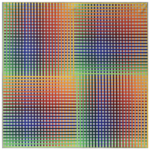
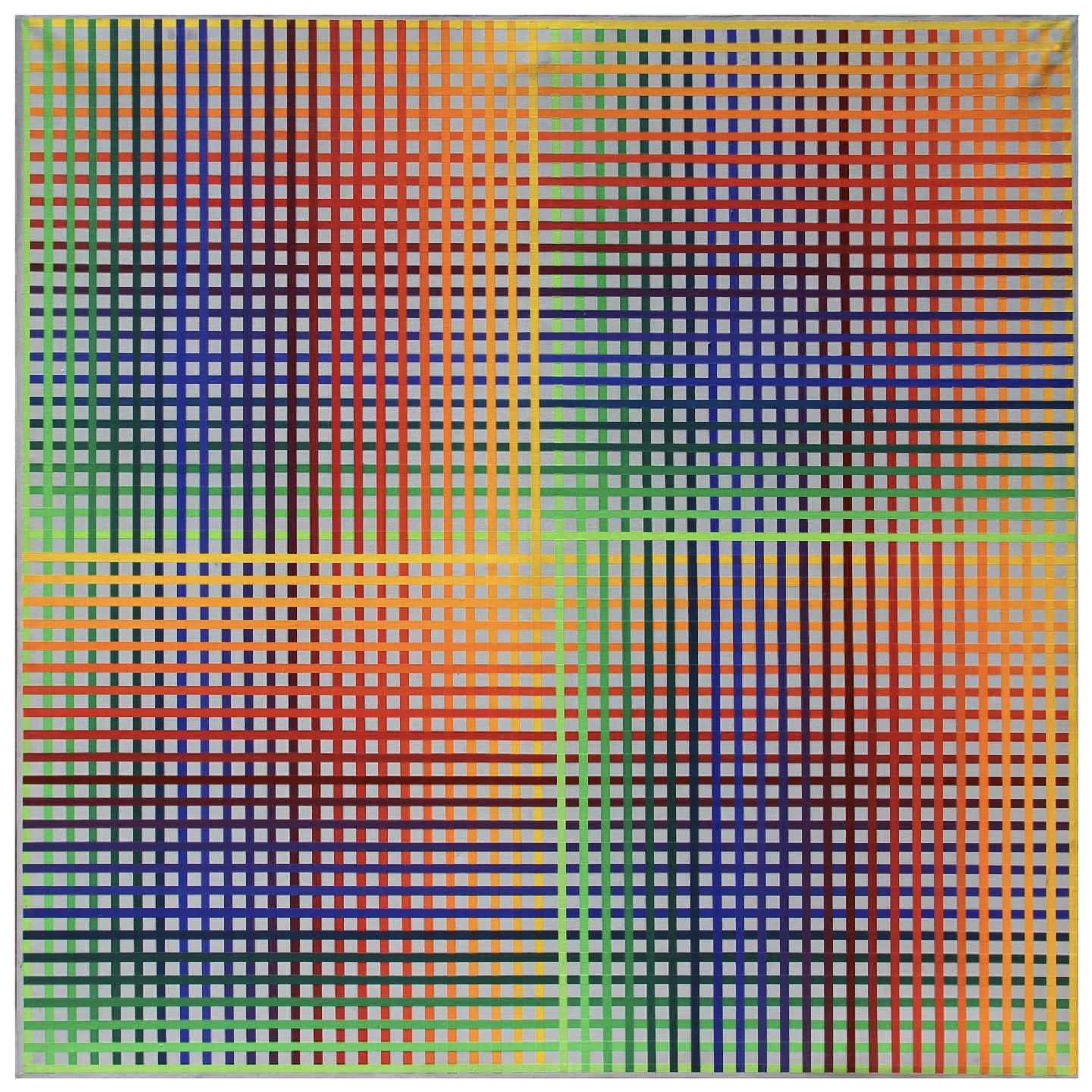
His personal research into the multiplication of two-dimensional forms, the use of a palette limited to black, white, and gray, and the vibration of colors, defined his work in the late 1950s. He transitioned from using light boxes to create actual movement—incorporating viewer participation and instability (1962–64)—and continued to structure light and color until 1966. He began to explore the complexities of language, integrating it into his work through a concrete-kinetic approach—a concept often reflected in the titles of his pieces. From 1972 onward, Rossi focused on two-dimensional work, seeking to capture the essence of light and its inherent qualities. Meticulous in the execution of his sculptures and inherently methodical, his paintings are likewise characterized by the absence of subjective gesture.
In 1966, the GRAV (Groupe de Recherche d’Art Visuel) took its work to the streets with the project Une journée dans la rue ("A Day in the Street") in Paris. The goal was to "engage with an unprepared public" and, in doing so, "dismantle the traditional relationship between the artwork and the viewer." This initiative was aligned with the broader movement toward the "democratization of art"—a theme also explored in exhibitions such as Dix ans d’Art Vivant at the Fondation Maeght in Saint-Paul-de-Vence (1967) and Lumière et Mouvement at the Museum of Modern Art in Paris.
Additional information
HORACIO GARCÍA ROSSI (1929-2012)
Nace en Buenos Aires, Argentina, en 1929. Estudia en la Escuela de Bellas Artes de la ciudad, y enseña allí algunos años después. Desde 1959 se establece y trabaja en París y al año siguiente, en 1960, es cofundador del Centre de Recherches d'Arts Visuel, que más tarde se convierte en GRAV (Grupo de Investigaciones de Arte Visual), al que pertenece hasta 1968 junto con J. Le Parc, F. Morellet, F. Sobrino, J. Stein y J.P. Vasarely. Desde finales de los años setenta, el artista explora en particular el problema de la relación entre la luz y el color, y su representación en términos pictóricos.
QUÉ ES GRAV?
GRAV sigla en francés del Groupe de Recherche d'Art Visuel (Grupo de Investigación de Arte Visual).
Grupo estético y artístico fundado en París durante el año 1960 por Julio Le Parc,
GarcíaRossi, Hugo Demarco, F.Morellet, Denise René, Francisco Sobrino Ochoa, J.Stein e Yvaral, en este grupo también participó Norberto Gómez. Como su nombre lo señala, el interés manifiesto fue el de investigar artísticamente con los efectos lumínicos, cromáticos y visuales en general, lo que conllevó a una experimentación óptica (op-art), cinética (arte cinético) e incluso háptica (principalmente táctil) de los objetos. Con tales elementos realizaron obras en las que resultaban determinantes la participación del "espectador" y las transformaciones espaciales. El grupo fue disuelto en 1968. Algunas de las realizaciones más destacadas se llamaron: Laberinto (1963); Laberinto II (1965); Un día en la calle (1966). Con el GRAV puede decirse que se inaugura decididamente un arte principalmente interactivo entre el "espectador" y la obra de arte.
El Grupo de Investigación de Arte Visual emitió su propio manifiesto, en el mismo se resalta que la obra no debe importar sino más bien su interpretación; ya que el punto de interés está en el ojo del espectador quien participa activamente en obras que son semejantes a instalaciones, algunas de estas obras poseen efectos cinéticos a partir de motores silentes, las personas participan en juegos de transparencias, luces, reflexiones y movimientos. Según tales criterios: se busca el arte despojado de las mistificaciones, reducido a una simple actividad humana.


2.5 x 4m / 98.4 x 157 in