
Miguel Angel Vidal
Bio
In 1952, he graduated from the Prilidiano Pueyrredón National School of Fine Arts (now IUNA Visual Arts) with a degree as a Professor of Visual Arts. His teachers included, among others, Lino Enea Spilimbergo and Eugenio Daneri. He served as Rector of the institution from 1989 to 1991. Additionally, he was a Professor of Painting and a thesis advisor at the Ernesto de la Cárcova Higher School of Fine Arts. He created his entire body of work in his Buenos Aires studio, from which he shared it with both Argentina and the rest of the world. He explored naturalism and studied the use of line as a form of expression. Over time, his expressive needs led him to engage with Post-Cubism, eventually moving on to investigate abstraction and geometry. He was a member of the "Grupo Joven" (1949–1951), and in 1959, together with Eduardo Mac Entyre, he founded the Buenos Aires Generative Art Movement—an initiative promoted in 1960 by collector Ignacio Pirovano and critic Rafael Squirru.
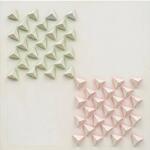
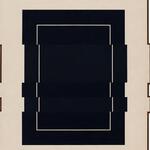
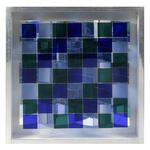
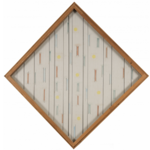
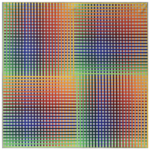
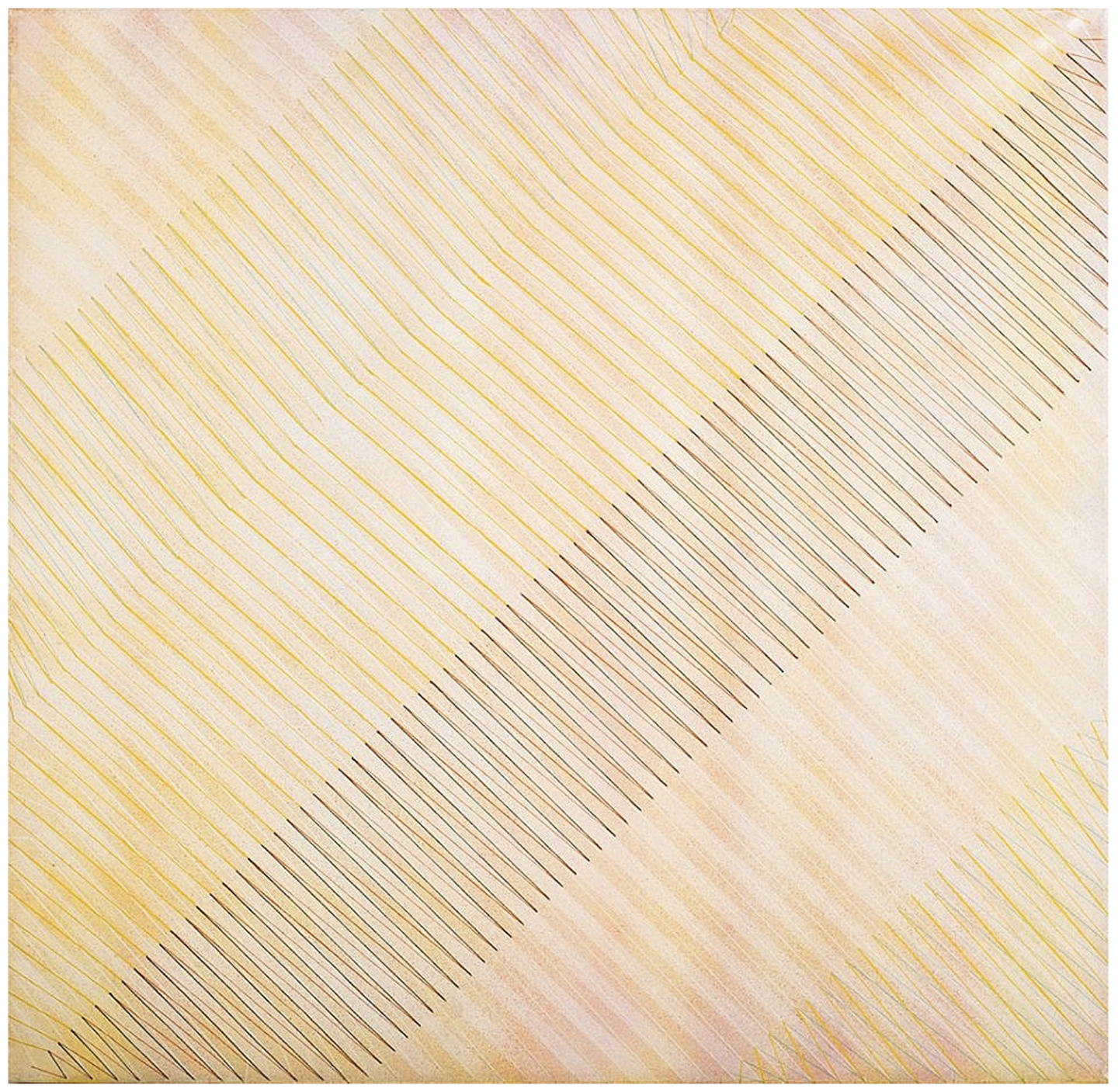
He produced one of the earliest instances of digital art, using images created on one of the country’s first computers at the ORT Schools' Computing Center. Some pieces from that series were featured in the exhibition Art and Cybernetics—organized by the Center for Art and Communication (CAyC) at the Bonino Gallery in August 1969—and are now part of the collection at the Victoria & Albert Museum in London. During his Topological Period, Vidal became interested in new scientific concepts regarding phenomena that unfold within space; he adopted and developed these ideas to offer a fresh visual proposition. The artist works with acrylic and metal boxes to engage with real, three-dimensional space—a topological space where light is reflected off concave and convex surfaces—which is then translated onto the canvas. From the late 1970s and early 1980s onward, light gains autonomy and becomes the dominant element in Vidal’s painting; it seems to take over the space, radiating an intensified energy. Bands of color are rendered through glazes, blurring their boundaries, while the rhythmic, melodic curves take on a nearly tactile quality.
Statement
He explored naturalism and studied the line as a form of expression. Over time, his expressive needs led him to engage with Post-Cubism, eventually moving on to explore abstraction and geometry. He was a member of the Grupo Joven (1949–1951), and in 1959, together with Eduardo Mac Entyre, he founded the Generative Art Movement of Buenos Aires—an initiative promoted in 1960 by collector Ignacio Pirovano and critic Rafael Squirru. He produced one of the earliest instances of digital art, creating images on one of the first computers in the country at the ORT Schools' Computing Center. Some pieces from that series were featured in the exhibition Art and Cybernetics—organized by the Center for Art and Communication (CAyC) at the Bonino Gallery in August 1969—and are now part of the collection at the Victoria & Albert Museum in London.


2.5 x 4m / 98.4 x 157 in