
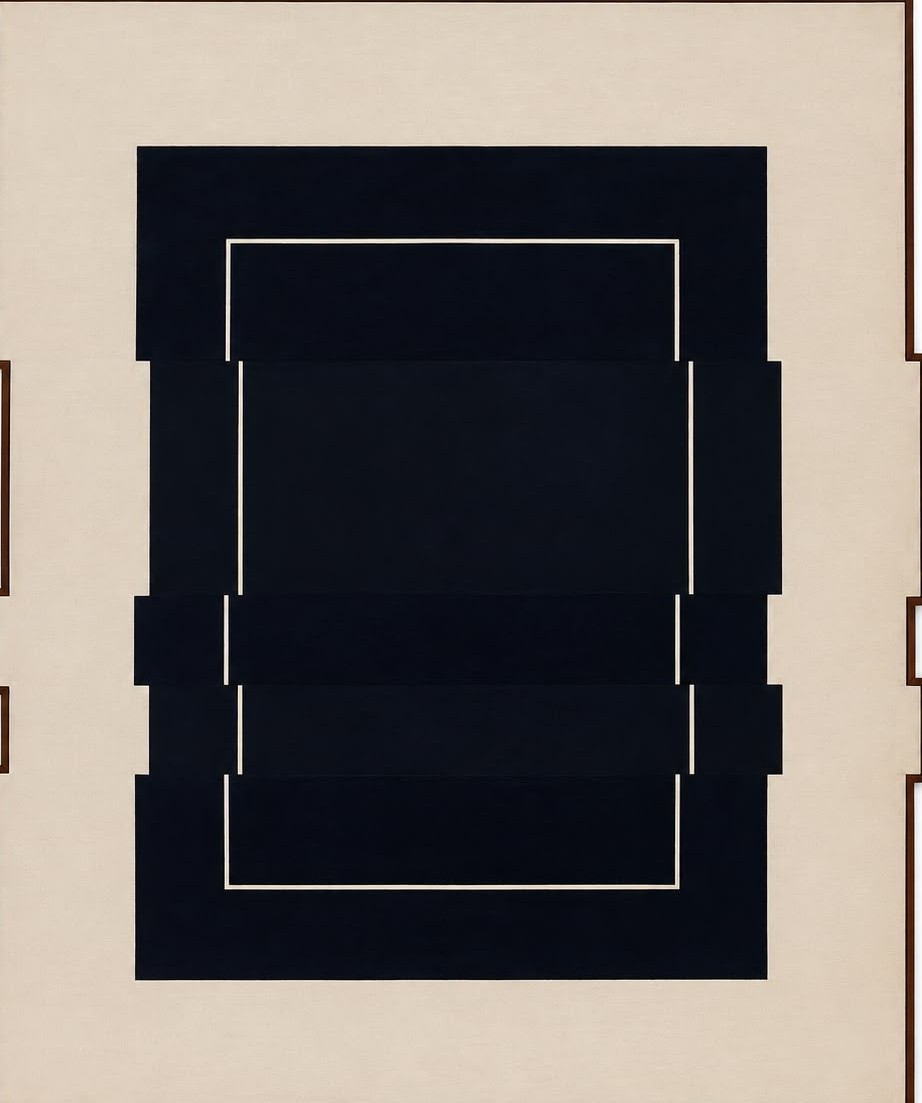
Guilermo Garcia Cruz
Bio
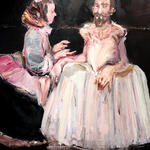
Guillermo García Cruz, Uruguayan visual artist, was born in Montevideo in 1988, the city where he also trained as a professor of Visual Communication at the Instituto de Profesores Artigas (IPA). He expanded his education at the Washington Studio School and the Corcoran School of the Arts and Design in Washington, D.C. . His professional beginnings were tied to illustration, graphic design, and comics, trades that allowed him to make a living from images before devoting himself fully to contemporary art . In his early years as an artist he developed a figurative painting of a realist nature, with portraits that led him to exhibit at spaces such as Galería Diana Saravia and to be a finalist for the Paul Cézanne Prize on two occasions. Around 2020, however, a decisive shift occurred in his production: he abandoned realism and immersed himself in geometric abstraction, taking as a reference the legacy of Río de la Plata concrete art and, in particular, the postulates of the Madí movement .
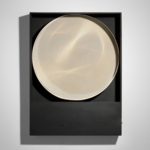
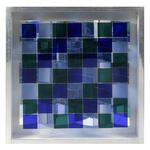
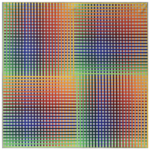
His international consecration was not an isolated event, but rather the culmination of a search that found in digital error and the screen a language of its own. García Cruz is one of the pioneers in conceiving geometric painting as a device that dialogues with the era of the technological image, using the glitch—the error or interruption in digital systems—as a metaphor for how contemporary thought is constructed: in a fragmented, superimposed manner mediated by screens . His Screens series rethinks Latin American abstraction from the logic of the luminous rectangle of the cell phone or monitor, with RGB palettes and compositions that emphasize the displaced contour of the canvas . Unlike the historical avant-garde, which sought to break with tradition, his work does not escape the torrent of images that surrounds us: it assumes them as raw material and turns them into a reflection on perception, uncertainty, and the human presence in the face of automation . In recent years, García Cruz has maintained a prolific output and a constant presence at international fairs and exhibitions, with solo shows at the Espacio de Arte Contemporáneo in Montevideo, Galería del Paseo in Lima, Proyectos Monclova in Mexico City, and Piero Atchugarry Gallery in Miami, as well as participations in Art Basel Miami Beach, Zonamaco, and Untitled Art . His work is part of public and private collections such as the CIFO – Cisneros Fontanals Art Foundation, the Pérez Art Museum Miami (PAMM), the Northwestern University Collection, the Luis Bassat Collection, and MACA (Museo de Arte Contemporáneo Atchugarry), among others . In 2019 he was highlighted by Arte Informado among the twelve artists of the next generation in Ibero-America, and in 2024 he presented Divergent Structure in Miami, his most ambitious sculptural exploration to date, where the reflections of stainless steel distort the viewer’s perception and translate the digital glitch into physical space.
Statement
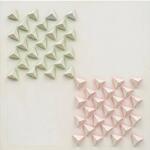
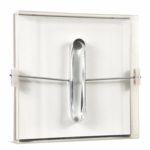
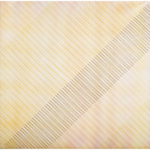
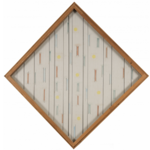
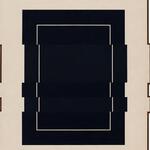
The work of Garcia Cruz is composed by a series of paintings and sculptures that play with the formal legacy left by Latin American concretism, either through Lygia Clark and her paintings from the Planos em Superfície Modulada series, as well as through the production of the movement Uruguayan-Argentine MADI from the 1940s. According to the movement’s group of artists, painting should not be conditioned by the rectangular canvas, on the contrary, the shape of the canvas should follow the structure of the painting. These references place us historically so that, from there, we can determine the similarities and differences that the artist proposes in his projects. If, on the one hand, we have a formal rapprochement between García Cruz and the constructivist heritage, on the other hand, we have an attempted rupture that occurs in the very structure of the work. This collapse that occurs within the object is most evident in this glitched works - the paintings and sculptures are always on the verge of separating, multiplying elsewhere, seeking a life of their own by fragmenting their body-structure into contextual space. Historically, we can relate this act of rupture with a reflection on the project of modernity and its collapse in Latin American contexts, as well as on our current moment of global changes where we feel disoriented and anxious about what is about to happen. García Cruz considers this production as an attempt to disorient the viewer’s perception in relation to the plane of the work and produce an effect of noise, like a temporary error or a “glitch”, an appropriate term used by the artist in the computer context and a reference to the title of the current exhibition. Repetition, movement, transformation, the limits between interior and exterior are some of the visible concerns in the artist’s production, in addition to the pictorial work itself, which may contain apparently opposite elements on its surface such as brightness and opacity, texture and flatness and that are not antagonistic, but rather share the same terrain and interest.
Additional information
Es una de las series mas importantes de Guillermo García Cruz y en este tamaño casi no existen.