
Carmelo Arden Quin
Bio
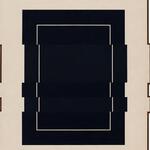
CARMELO ARDEN QUIN was born on March 16, 1913 in Rivera (Uruguay). He approached the plastic arts through the Catalan writer Emilio Sans, a friend of his family. In 1935 he met Joaquín Torres García at a conference at the headquarters of the Theosophical Society. After his proposals in a cubist style, he was leaning towards his first non-orthogonal paintings, transgressing the traditional limits of the rectangle. He exhibited some of those works during a demonstration in support of the Spanish Republic.
From the end of 1937 he settled in Buenos Aires, frequented the avant-garde artists and studied philosophy and literature at the University. In this city he shared the workshop with the Chilean artist Miguel Martínez, who introduced him to Gyula Kosice. In 1941 he was co-founder of the bimonthly newspaper El Universitario, where he published his political and aesthetic ideas. He participated in the publishing group of Arturo. Revista de Artes Abstractas [Abstract Arts Magazine] together with Kosice, Rhod Rothfuss, Edgar Bayley, Tomás Maldonado and Lidy Prati. In 1944 they edited the only issue of that publication, in which Murillo Mendes, Vicente Huidobro and Torres García also collaborated.
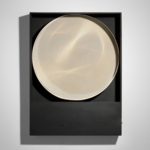
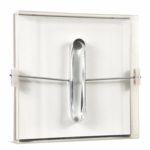
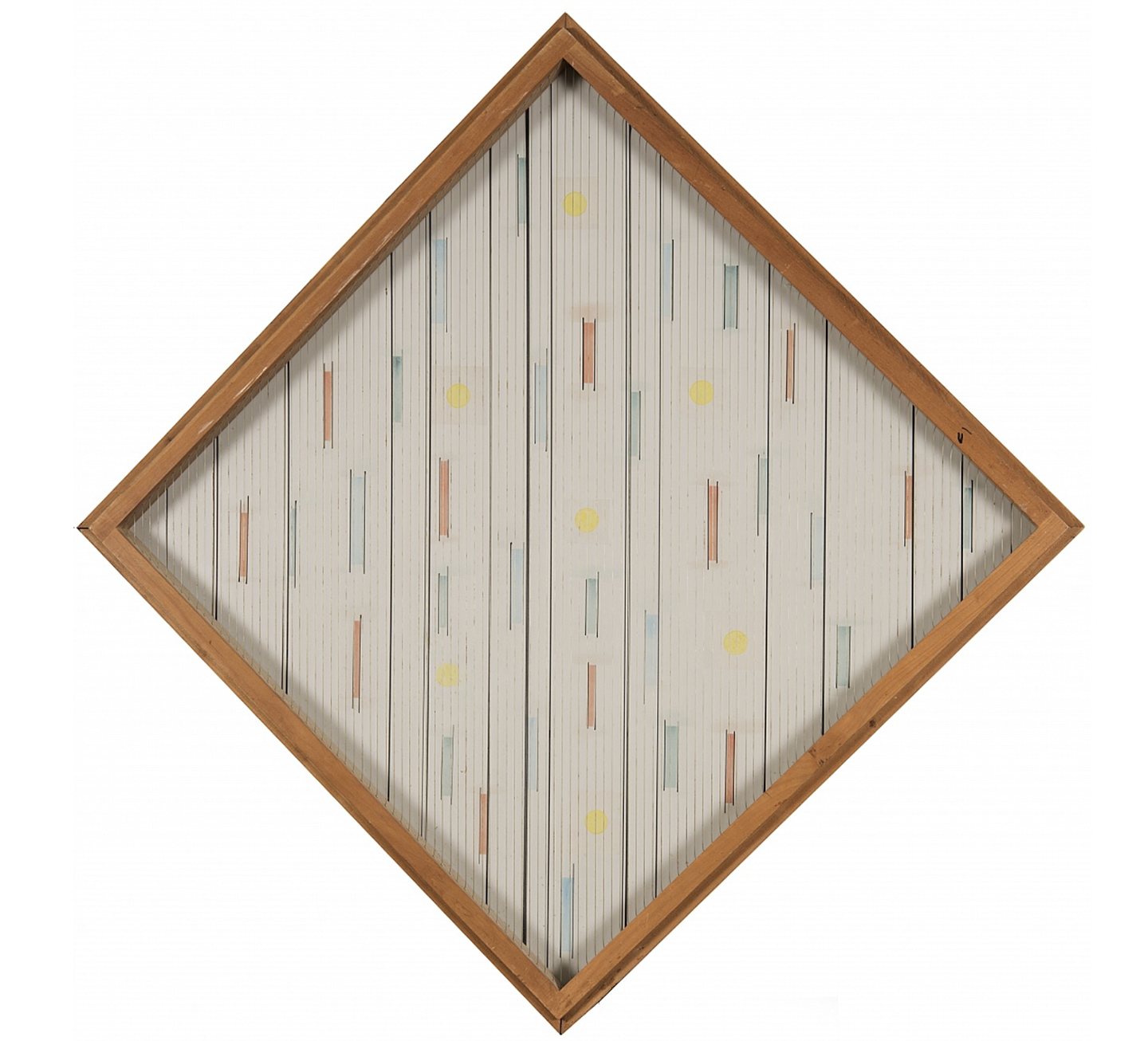
In 1945 he participated in the Movimiento de Arte Concreto Invención (MACI) which presented his works at the private residences of Pichón Rivière and Grete Stern. In 1946 the group was divided, one part arose the Arte Concreto Invención Association and, on the other, the Madi Group. Within the latter, Arden Quin participated in the four exhibitions that were presented during the second half of that year at the Van Riel Gallery and at the “Altamira” Free School of Plastic Arts, held in Buenos Aires, as well as in the first Madista International exhibition, organized at the Ateneo de Montevideo. In this period he made polygonal frame works, mobile structures, coplanars, object paintings and concave works, which he called Formes Galbées. Around 1948 he moved to Paris, where he frequented Michel Seuphor, Marcelle Cahn, Auguste Herbin, Jean Arp, Georges Braque, and Francis Picabia, among other avant-garde artists. There, he held numerous exhibitions and participated in the Salon des Realités Nouvelles.
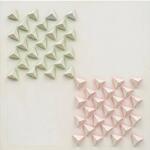
During this period, he introduced collage and decoupage in his work, a resource that he used until 1971. In Buenos Aires, he co-founded the Arte Nuevo group, made up of artists of different non-figurative tendencies, which held its first exhibition at the Van Riel Gallery (1954). In Paris he directed the magazine Ailleurs and, during the 1960s, he participated in the Poesía Concreta movement. After fifteen years, in 1971, he returned to painting. He continued to work at his home in Savigny-sur-Orge until his death on September 27, 2010.
Additional information
Nacido en Rivera, Uruguay, Carmelo Arden Quin conoció a Joaquín Torres García en 1935 y, poco después, inició su producción no figurativa, en la que experimentó con lienzos no ortogonales que se exhibieron por primera vez en Montevideo.
En 1937 se estableció en Buenos Aires, donde entró en contacto con artistas de vanguardia como Gyula Kosice. Arden Quin se convirtió en uno de los principales impulsores del movimiento Madí, un grupo integrado por artistas de diversas disciplinas, como la poesía, el teatro, la música y la danza. Los artistas madistas participaron en la primera exposición internacional «madista», celebrada en Montevideo, en la que Arden Quin presentó obras con marcos poligonales, móviles y estructuras coplanares.
En 1948 viajó a París, donde conoció, entre otros artistas, a Michel Seuphor, Auguste Herbin, Jean Arp y Georges Braque, y participó en el Salon des Réalités Nouvelles. A su regreso a Buenos Aires, en 1954, fundó junto con Aldo Pellegrini la Asociación Arte Nuevo, que reunió a artistas no figurativos. Su primera exposición tuvo lugar en 1955 en la galería Van Riel de Buenos Aires. Durante esos años fue pionero en el uso de las técnicas del collage y el découpage. Más tarde, se interesó por la poesía concreta y, en 1962, fundó la revista Ailleurs.